Disclaimer
CYBER.CO.KE is an independent website that provides KRA Services to customers in Kenya. We are not affiliated with any government agency in Kenya including Kenya Revenue Authority (KRA). We charge a service fee for the assistance provided to customers in Kenya.
Kenya Revenue Authority (KRA) has announced a major change in how income and expenses declared in tax returns will be verified starting in 2026.
Beginning 1st January 2026, Kenya Revenue Authority (KRA) will start validating income and expenses declared in both individual and non-individual income tax returns.
This exercise will mark a significant step in Kenya Revenue Authority (KRA) efforts to enhance accuracy, transparency, and compliance in tax reporting for all taxpayers across Kenya.
What the KRA Returns Validation Will Cover
According to the public notice issued on 7th November 2025, Kenya Revenue Authority (KRA) will verify income and expenses declared by taxpayers against several official data sources. The process will rely on:
- TIMS/eTIMS Invoices – These are electronic tax invoices generated and transmitted through the Tax Invoice Management System (TIMS) or the enhanced TIMS (eTIMS). They provide verifiable transaction data between buyers and sellers.
- Withholding Income Tax Gross Amounts – Kenya Revenue Authority (KRA) will match declared income and expenses with withholding tax records submitted by withholding agents to ensure consistency between what is withheld and what is declared.
- Import Records from Customs Systems – For taxpayers involved in importation, Kenya Revenue Authority (KRA) will cross-check declarations with customs import data to verify the accuracy of declared expenses related to imports.
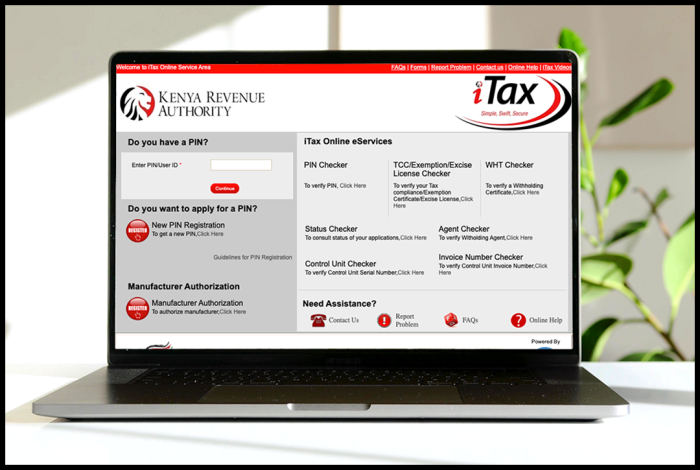
This validation will apply to the 2025 year of income or accounting period returns, which will be filed through the iTax platform in 2026.
Why This Change Matters
The upcoming validation process is part of Kenya Revenue Authority (KRA) broader strategy to digitize tax administration and reduce fraudulent or inaccurate declarations.
By cross-referencing taxpayer data with verified electronic records, Kenya Revenue Authority (KRA) aims to:
- Improve compliance levels among individuals and businesses.
- Reduce tax evasion and manipulation of accounting records.
- Ensure that deductions and expenses claimed are genuine and supported by valid documents.
- Simplify audit processes by using real-time digital data from integrated systems.
For businesses already using eTIMS, this will be a seamless process, since their invoices are automatically transmitted to Kenya Revenue Authority (KRA) systems.
However, taxpayers who have not yet onboarded to eTIMS are strongly encouraged to do so before the end of 2025.
What Taxpayers Should Do
To prepare for the validation, Kenya Revenue Authority (KRA) advises taxpayers to:
- Ensure all income and expenses are supported by valid electronic tax invoices. These invoices should be correctly transmitted with the buyer’s KRA PIN where applicable.
- Request TIMS/eTIMS schedules from their account managers or suppliers to confirm that their invoices have been properly reported to Kenya Revenue Authority (KRA).
- Reconcile their accounting records with TIMS/eTIMS and withholding data before submitting their 2025 returns.
- Update their systems and processes to align with the requirements of the Tax Procedures (Electronic Tax Invoice) Regulations, 2024.
This proactive approach will help taxpayers avoid mismatches, penalties and delays during the filing and validation process.
Legal Framework
The validation process is guided by Section 23A of the Tax Procedures Act, Cap 469B, and the Tax Procedures (Electronic Tax Invoice) Regulations, 2024.
These regulations require taxpayers to issue and maintain valid electronic tax invoices for all taxable transactions, except for cases exempted under the law.
The move also aligns with Kenya’s ongoing digital transformation agenda, ensuring that tax data is securely captured and verified electronically to promote accountability and efficiency.
KRA’s Call for Collaboration
Kenya Revenue Authority (KRA) has invited feedback and insights from taxpayers and stakeholders to ensure a smooth rollout and effective implementation of the validation process.
The Authority continues to emphasize partnership and cooperation, urging all taxpayers to engage their designated account managers for support and clarification.
This move by the Kenya Revenue Authority (KRA) represents a significant milestone in Kenya’s transition toward data-driven tax compliance.
By integrating digital records such as eTIMS invoices, withholding tax data, and customs import records, Kenya Revenue Authority (KRA) is setting a new standard for accuracy, fairness, and transparency in tax administration.
Taxpayers are therefore advised to ensure that their 2025 financial records are fully compliant ahead of the January 2026 rollout.

Matthews Ohotto is an Article Writer at CYBER.CO.KE and a Video Creator at the YouTube channel Taxpayer Tutorials. He specializes in writing helpful Articles and creating informative Videos that empower Kenyans with practical skills and knowledge. He holds a Bachelor’s Degree in Business Information Technology (BBIT) from Jomo Kenyatta University of Agriculture and Technology (JKUAT).